I’m potty for second-hand garden equipment
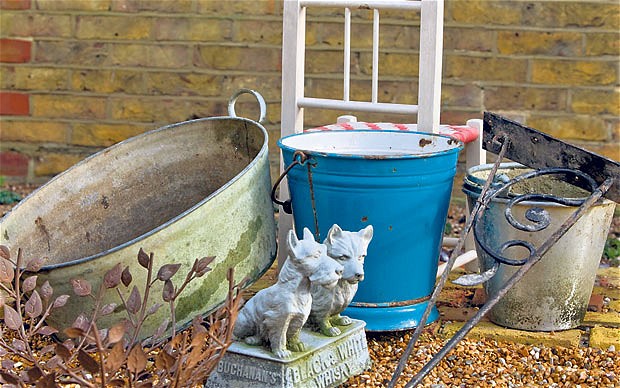
Precious metal: the surprisingly good gardenalia finds currently adorning Francine’s garden Photo: Martin Pope

The colourful asters provide a final blast of summer inside the herbaceous gardens and this weekend visitors can join a free guided tour and get the right way to grow and group asters from the garden’s experts.
There might be another Michaelmas Daisy Day on September 22 in aid of the National Garden Scheme, when all of the entrance fees would be donated to charities supported by the NGS.
Waterperry Gardens were developed during the last two decades and include a proper Garden, the Mary Rose Garden, a Waterlily Canal and the Long Colour Border.
The 60-metre-long herbaceous border is a vibrant sight right as much as the beginning of winter and in September it features goldenrod and Helenium in addition to Michaelmas daisies.
The Formal garden is enclosed by yew and has a conventional box knot, clipped topiary and medicinal herb garden.
For full information about the garden visit www.waterperrygardens.co.uk
This weekend’s guided tours occur at 11.30am, 2pm and three.30pm, with the garden opening from 10.30am to 4pm.
The NGS Michaelmas Day on Sunday September 22 runs from 10am to five.30pm.
Onil rug
I can’t imagine there’s a huge marketplace for outdoor rugs, but there’s no denying this one from Roche Bobois with its multi-coloured zigzag pattern will be an attention grabbing way addition to a deck or patio – perhaps under the picnic table to delineate a dining ‘zone’
They also are great for small gardens because they grow upwards instead of outwards, so that you can pack more in.
A little bit of housekeeping over the fall will ensure your climbing plants look great again next year, so in the reduction of overgrown climbers once they have finished flowering unless they’ve fabulous berries.
You also needs to tie new shoots to supports now, so that they don’t get blown about and pull off older growth during autumn and winter storms.
Many climbers and wall shrubs are commencing to get interesting now, with bright berries in all shades of red, orange and yellow – and doubtless a fair more comprehensive range of autumn foliage colours.
If you planted Pyracanthus you’ll be richly rewarded with a rare berry display over the arriving months, to illustrate, and if you happen to were brave enough to plant Boston ivy, your walls or fences will begin their transformation to blazing red.
But September is an efficient time take into consideration easy methods to introduce much more variety into your garden, so listed below are a number of suggestions of stupendous climbing plants.
In spring, the Madagascar jasmine (Stephanotis floribunda) is a simply stunning evergreen climber with glossy green leaves and heavily scented, waxy, white flowers which appear in small clusters from spring to autumn.
The down side is that they will only survive winters in warm, sheltered gardens which will only really be permanently planted outdoors inside the South.
But don’t let that stop you growing it in a huge pot with a trellis support when you have a conservatory to maintain it over winter.
The Mexican blood flower (Distictis buccinatoria) is an easier bet for many of the rustic – although it’s not suitable for gardens in extremely cold areas.
This is another evergreen climber and has crimson trumpet-shaped flowers with yellowy-orange centres from early spring to summer.
The Chocolate Vine (Akebia quinata) is better for colder areas, because it can survive frost and temperatures of around minus 5C. It’s a mild, woody-stemmed climber with vanilla-scented, brownish-purple flowers from late spring, that are followed by sausage-shaped purplish fruits.
The Star jasmine (Trachelospermum jasminoides) is, like its name suggests, an absolute star performer and suitable for many gardens because it can survive most frosts.
It’s another evergreen with very fragrant and mild star-shaped white flowers which appear in summer and bring long pairs of pods for autumn interest.
Solanum jasminoides ‘Album’ is sort of as useful, even though it doesn’t adore it when temperatures dip below 0C for long.
This also has pretty little star-shaped white flowers which, although lacking a gorgeous scent, do have the benefit of being on show all summer and autumn. It’s also semi-evergreen so it’ll hide fences and sheds all year around.
Actinidia kolomikta is an extremely unusual wall shrub because its long green leaves are largely edged in creamy-white or pink.
It also has small, cup-shaped white flowers in summer, but better of all it’s fully hardy – which means that it is going to survive temperatures as little as minus 15C.
Tropaeolum tubersum is a really pretty climber with greyish-green lobed leaves and golden-orange cup-shaped flowers from mid-summer to late autumn. It may endure the cold, but not less than 0C – so gardeners within the North might struggle – but it’s worth trying in a sheltered corner.
Finally, Jasminum polyanthum is another fabulous evergreen jasmine, but this one has the benefit of carrying large clusters of fragrant white flowers from late summer all through to winter, when it’ll happily withstand temperature as little as minus 5C.

To get them off to a healthy start, sit the container in water for an hour or two in order that the roots get an exceptional soaking before you plant the hot addition on your garden.
While they may be soaking, dig a hole that is a bit wider and deeper than the scale of the basis ball, and pep up the soil by adding a spadeful of garden compost mixed with a handful of bone meal to the underside of the opening.
Once the soil round the shrub is saturated, ease the plant out of its container very carefully, so that you don’t damage it, then pull out the roots somewhat in order that when the shrub is planted the roots will grow outwards instead of continuing to grow round and round.
When sure you plant the shrub the soil should only arise to the identical height at the its stem because it did when it was within the pot.
To assist you get this right, lay a cane excessive of the outlet to apply as a height guide if you happen to lower the foundation ball into the bottom.
If the opening is simply too deep just pile one of the vital soil you dug out back into the outlet, then position the roots and fill within the side of the opening with more soil.
You can firm down the soil along with your hands or your feet – gently – then add more soil if needed and firm that down until you’re happy that your new shrub is planted firmly enough to resist windy days.
Finally, water the soil round the shrub well and canopy with a mulch of garden compost, bark chippings – and even lawn clippings – to assist keep the soil moist.
Good shrubs to plant in case you haven’t already got them for your garden are spring-flowering shrubs, which includes Viburnum plicatum, which has lace cap-like heads of white flowers followed by red fruit inside the autumn, when the foliage turns an enchanting reddish-purple shade.
And no spring is complete without the intense yellow flowers of the Forsythia.
One of the preferred is the Forsythia x intermedia which grows to about 1.5metres high and wide.